
 I promised when I created my second series, Niki Undercover Thrillers, that I would make my writing life easier. I particularly wanted to improve ease of marketing the series.
Turns out my stories have minds of their own—just like my characters.
I wanted to simplify setting. I had allowed the stories in the Seamus McCree series to take place in a variety of locations: The Cincinnati, Ohio area was the setting for the first two novels. Four of the next six used Michigan’s Upper Peninsula. The other works used Boston, Savannah, and a road trip with various stops along the Eastern Seaboard.
Each story worked well using those locations, but that inconsistency makes it darn near impossible to use location to help market the series—to give readers a hook to grab onto. Lesson learned.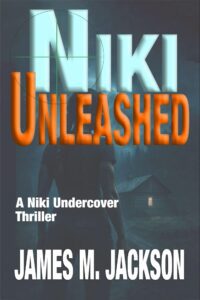
With the Niki Undercover Thriller series, I concentrated the action in Washington, D.C. (making sense for an undercover federal agent), and the Twin Cities of Minneapolis and St. Paul, Minnesota. That worked well for the first book, Niki Undercover, but for the second, Niki Unleashed, the story “required” me to expand to rural areas in nearby Wisconsin. As I plan book three, Washington, D.C. will play a major role; but the Twin Cities probably won’t. If rural areas sneak in again, they’ll be ones familiar to my readers.
The Seamus McCree series started out as first-person narrated mysteries with Seamus as the only point-of-view (POV) character. The reader knew only as much as Seamus McCree did. With the third novel in the series, Cabin Fever, I employed multiple POV characters, introducing a typical thriller element into the stories: the reader knows more than the protagonist. I continued using multiple POVs until the seventh novel, Granite Oath, when I realized the way to tell the strongest story was using only Seamus’s POV. It’s still a thriller, but without the other POVs, it has mystery elements because the reader discovers along with the protagonist. I think of these as mystery/thrillers. The eighth novel, Hijacked Legacy, is back to pure thriller with multiple POVs.
Planning the Niki Undercover Thriller series—by definition, the novels needed to be thrillers, and for marketing, I wanted them to be consistent with multiple POVs and the reader knowing more than Niki. I did that with the first novel, Niki Undercover. I did the same with the first two drafts of Niki Unleashed.
As a pantser, I write my first draft without knowing what the plot is or what the characters plan. My second draft straightens the plot, filling holes and deleting tangents. With the third draft, I begin crafting the story.
One craft task I set for myself is to eliminate any POV not required to tell the story. As I worked on that aspect for Niki Unleashed, I determined that each time I eliminated a POV character, I improved the story—until only Niki remained. I had created another mystery/thriller.
Given the choice of reintroducing other POVs and converting it back to a pure thriller or telling the strongest story I can, I chose strength and Niki’s single POV. Marketing is important, but not if it means taking away from the story. The pattern was there for me to see, but it wasn’t until I was drafting this blog that I had an epiphany.
When the inciting incident of one of my stories is a specific mystery question (Ant Farm: who killed Samuel Presser? Bad Policy: who staged a murder victim in Seamus McCree’s basement? Granite Oath: What happened to Valeria’s mother? Niki Unleashed: who is killing executives of America’s largest polluters?) the strongest way I know to tell the story is by allowing the reader to join the protagonist in the search for answers without giving away what any of the other characters are thinking or how they act when they are not in the protagonist’s presence.
When the inciting incident is less specific, for example in Cabin Fever where Seamus finds a naked woman nearly frozen to death on his cabin’s screened porch, the strongest story I can write requires multiple POVs.
 It turns out the most important lesson I’ve learned is that I can’t fight who I am as a writer. Despite my best intentions to make my marketing life simpler, I erect speed bumps—all for the best of reasons.
Now I’m curious. Fellow authors, do you control your POV choices, or do they choose you? Readers: if a novel calls itself a thriller, are you okay with it being a mystery/thriller as I described, or is that false advertising?
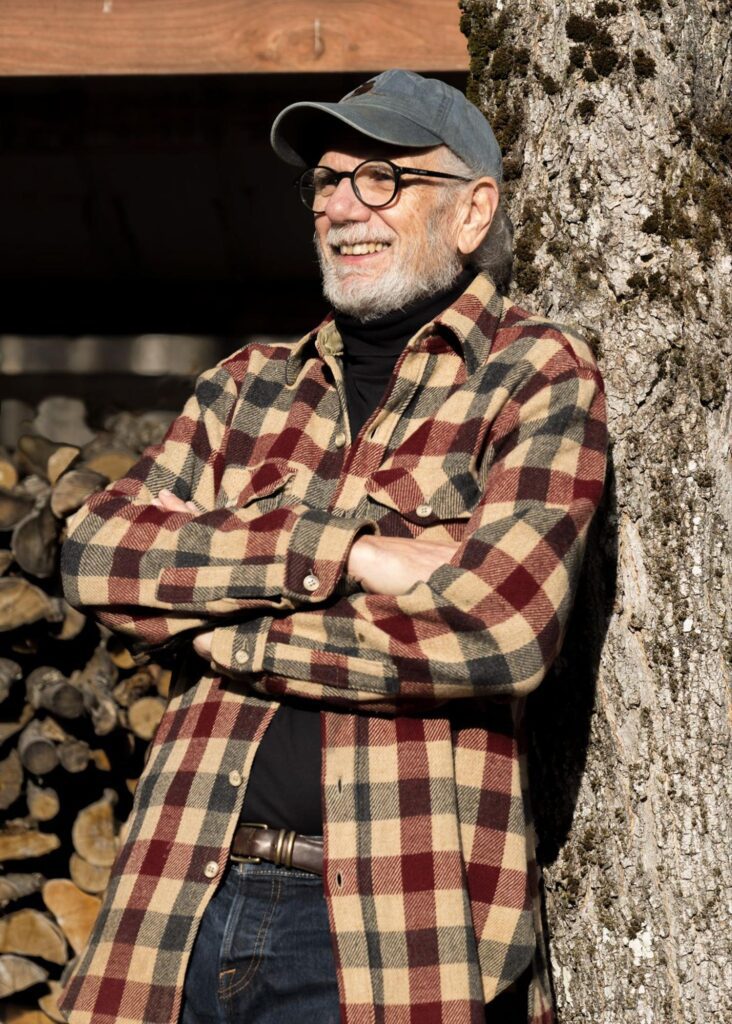
James M. Jackson writes justice-driven thrillers with “brains and bite,” including the award-winning Seamus McCree series. That series explores financial crimes, family relationships, and their deadly intersection across eight novels, two novellas, and several short stories. His Niki Undercover Thriller series stars Ashley Prescott, an undercover federal agent fighting domestic terrorism of all kinds. A life member of Sisters in Crime and past president of its Guppy Chapter, Jackson calls home the deep woods of Michigan's Upper Peninsula. When he’s not tormenting his characters, he’s likely birdwatching, hunting for moose sheds, or tracking wolves. Find news, extras, and upcoming events at https://jamesmjackson.com .
Thanks for sharing the speed bumps you realized authors encounter despite what they plan and why they’re usually for the good. Love the Niki series.
Thanks so much for having me, Debra. And I’m super-delighted that you enjoy the Niki series so much.
I’m glad to meet another author who listens to his characters. Great post!
Thanks!
Definitely was a good post and I think it makes the point of needing to listen to one’s characters for a story to flow well.
Of course, we’ve got to listen to our characters! I’ll have to sample the Niki series –
Ah — but I know some write-to-market authors who dictate, don’t listen. I hop you enjoy Niki and her friends.
GP, it is an interesting series. Jim rights books that move quickly, but he definitely gets into character development.
Coincidentally, I’ve just changed the POV of my next book, Jim. Sometimes it’ impossible to force my will on a character when they rebel against my plan. Thanks for sharing your experience.
That can be a gut-wrenching decision, can’t it. But, when you realize what needs to be done, the work just opens up. At least that’s been my experience. I hope your rewrite goes smoothly.
You are so right, Gay. When I wrote the first Sarah Blair mystery, I fell into the trap Jim described. I ended up finishing the book then throwing out the second half because I didn’t listen to the characters. Once I did, not only did the book flow, but it was well-received.
Thriller as a genre has been so watered down since it’s original definition of “a suspense with consequences of epic proportions” that I don’t care. I had the opportunity to ask Lee Child if he thought marking books as ‘thrillers’ was a publisher’s way to generate more sales. He said, “The difference between a suspense and a thriller is an extra zero on your advance.” I’m a deep POV author, and don’t ever want to know more than the protagonist. (Cut my teeth on Sherlock Holmes). I write mysteries and that’s the genre I prefer to read, although I do venture into the realm of suspense, as it’s too often unavoidable.