
Years ago, I attended a presentation on young adult fiction at a writer’s conference in which the speaker exhorted us to “get parents out of the way” and relegate them to the periphery of our stories.
In my opinion, her advice was both on the mark and totally off. Yes, in YA fiction, our teen protagonists must have agency and tackle their own challenges without adults swooping in to save the day. But no, parents remain hugely influential and emotionally significant in the lives of young people. I know this to be true not only from my own growing-up experiences but from my decades of working with teenagers passionate about dance. So many would confide how upsetting it was when they felt their parents either weren’t especially interested in them or disapproved of their life choices or identities. The fact is, parents and the messages they send to us are hugely impactful.
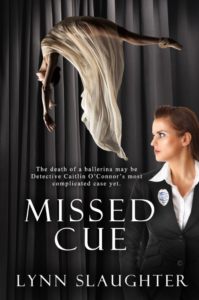
Moreover, this impact continues into adulthood. In my novels about homicide detective Caitlin O’Connor, I explore this dynamic in Caitlin’s personal life. In MISSED CUE, she has the habit of getting involved with married men and is currently engaged in an affair with the medical examiner. She feels guilty and knows her behavior is wrong—not only hurtful to others, but self-destructive. She finally goes into therapy. Dr. Stein, her therapist, helps her recognize that she’s in part reacting to the messages she received from her late father, a police chief whom she idolized. She wanted to be just like him, totally dedicated to a career in law enforcement. But he’d made it clear that “good mothers” (like Caitlin’s own) stayed home with their children, and the “smart career women” he greatly admired avoided the complications of marriage and family. Rationally, Caitlin knows that’s ridiculous. After all, her best friend has successfully combined marriage and family. But emotionally, Caitlin buys into her father’s pronouncements. Needing affection and connection, she avoids available partners and seeks out married men where there’s no possibility of them interfering with her dedication to her career.
By the end of MISSED CUE, Caitlin is getting healthier. She’s finally cut ties with the philandering medical examiner and has begun a much healthier relationship with a divorced father.
And yet, her anxiety about making a permanent commitment to marriage and family remains. In the sequel to MISSED CUE, DEATH IN THE END ZONE, Caitlin grapples with her reluctance to “move to the next level” in her relationship with her new boyfriend, Hank. She adores him and his young son, and Hank clearly wants to marry her. She has to work through the remnants of the messages her dad sent her that she internalized, especially around the issue of raising children since her job sometimes involves crazy hours.
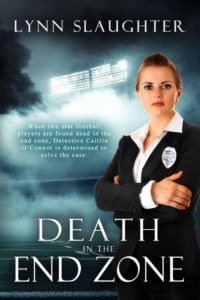
In addition, she’s grappling with her widowed mom having blossomed after the death of Caitlin’s dad. Her mother has returned to school to pursue her long delayed dream of earning a doctorate and has found love with a new man. Like so many adult children, Caitlin struggles with this new version of her mom, particularly her acquisition of a new partner. Caitlin loves her mother and wants her to be happy, but she still finds it hard to see her father replaced in her mom’s life.
Echoes from childhood affect us throughout our lives. It’s not surprising that in exploring and building the world of our characters, their past has a tremendous lingering influence.
Lynn,
Thanks for posting today. Your analysis is spot on – as are your characters’ arcs incorporating them.
Thanks, Debra! I really am fascinated by the impact of our childhoods on our development throughout our lives.
Thanks so much for hosting me, Debra!
I’m intrigued by psychological studies, the more complicated, the better. I’m rooting for Caitlin and hoping she is able to find true happiness.
that remains to be seen… guess we need to tune in for the next book.
Thanks, Saralyn. Caitlin does get significantly better over time, although like all of us, she’s a work-in-progress!
Searching for something we wanted but didn’t have in our childhood leaves an aching hole that is not always filled with the best benefits. But it does make a great premise for a story.
Fully agree with you.
That’s such an inciteful comment, Kathleen. Thank you!
Fabulous article Lynn, We are always battling our pasts in one way or another.
Thanks for stopping by today, Darlene. Your point is well made. The extent is where it becomes an issue.
Pingback: My Fiction Writing Addiction | Lynn Slaughter