
 “Relax,” said the librarian in the history department at the Los Angeles Public Library. “If you can’t find it, probably no one else can.”
Probably. Hmmmmm. Probably doesn’t mean won’t, and knowing my luck, some self-important blowhard is going to find some uber obscure factoid that I missed in my latest historical mystery and work out their feelings of inadequacy by making me feel like an utter idiot who has no right to touch a keyboard, let alone publish anything!
Who, me? Obsess?
But the kindly Mr. Peter Hauge, of the LAPL, was making a most excellent point. There are all kinds of reasons why authors can’t find certain historical information, and it isn’t necessarily being sloppy. Sometimes the information simply doesn’t exist. Or doesn’t exist where the author can reasonably be expected to get their hands on it. I didn’t have one of my favorite resources because I didn’t know it existed until an Internet search for something else turned it up right before my third book in the Old Los Angeles series came out.
I have a backup excuse, if you will, for when I do mess something up. The series is supposedly the memoirs of my narrator and main character, Maddie Wilcox. She’s (fictionally) writing these episodes as an old woman in the 1920s, not as her younger self in 1870s Los Angeles, the setting of most of the books. Book six, Death of a Proper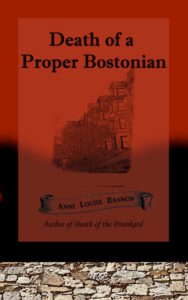 Bostonian, takes place in Boston but within the same timeframe of 1873. So, when a fact isn’t correct, I can claim that Maddie didn’t remember it correctly.
That doesn’t mean I’m not going to try to nail everything down that I can. I have my pride. I want my work to be the absolute best that I can make it, not just for the blowhards, but because when people talk about what they like about the Old Los Angeles series, they almost always mention my attention to detail and how I really get the facts of the period right. I owe it to my readers.
Okay. You caught me. I try to get everything as correct as I can because I’m about as neurotic as it gets, no matter how much I remind myself that I’m not perfect and that’s okay. And any reaction from a blowhard is more about the blowhard than it is about me. I’m still worried that someone will catch me out.
As my wonderful husband often says, insecure writer is redundant. So, if you will excuse me, I am going back to my research rabbit hole and do my damndest to find those freaking records that bear on the plot of book seven, because if I don’t, you know what will happen.
~ ~ ~ ~
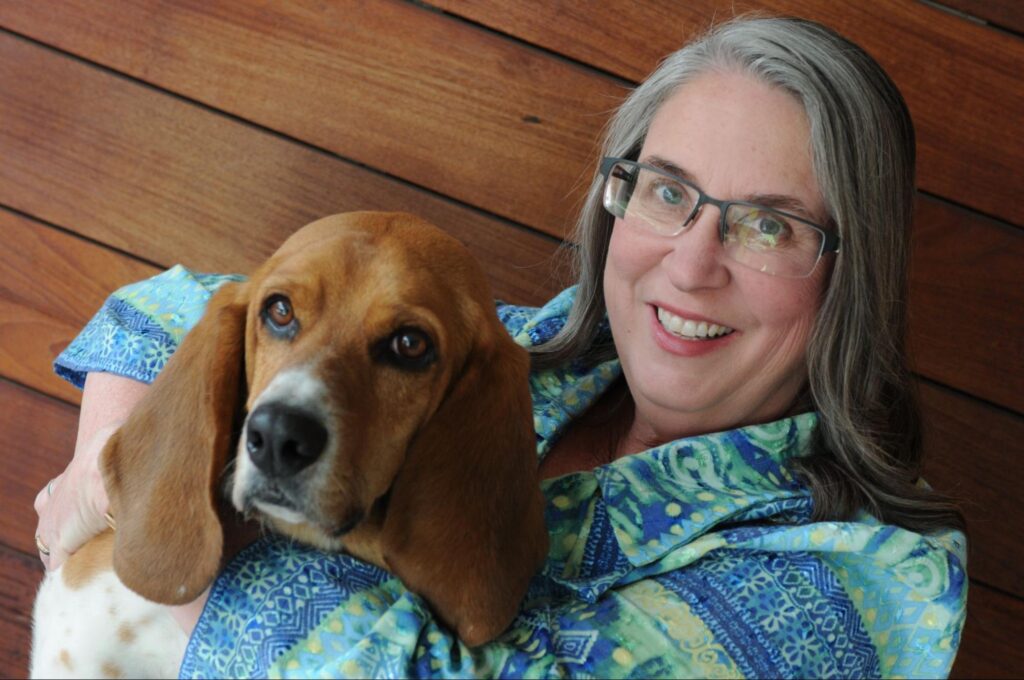
Author Anne Louise Bannon’s husband says that his wife kills people for a living. Bannon does mostly write mysteries, including the Old Los Angeles Series, the Freddie and Kathy series, and the Operation Quickline series. She has worked as a freelance journalist for magazines and newspapers, including the Los Angeles Times. She and her husband, Michael Holland, created a wine education blog, and she co-wrote a book on poisons. She and her husband live in Southern California with an assortment of critters. Visit her website at AnneLouiseBannon.com .
new author for me and book sounds and looks interesting & intriguing
That’s very sweet of you to say so. Thanks!
And Debra, thanks so much for hosting me today.
My pleasure.
Writing a book on poisons? Now that sounds interesting.
it is.
Great post, Anne. I kind of like research, but then I’m not trying to recreate an historical era. But I do write police procedurals, which is a bit out of my wheelhouse. So I get the fear that someone will call you out, only in my case it would be about a mistake in those procedures.
And thanks for the comment about blowhards’ comments being more about themselves. I just got a comment from my website contacts page from a blowhard, and I was debating whether or not to answer it. Now I’m thinking, not!
Exactly.
I agree. Don’t answer the blowhards. (Just please remind me when I want to go after one’s you-know-whats>
Poetic license gives you some leeway, as does the willing suspension of disbelief. When I’m engaged in a story, I trust the author to lead me where I’m supposed to go. I don’t sit outside of the setting and look for nits to pick. Thank you for being so conscientious about your writing. You are one of my favorites!
You have a point. But I do not want my poetic license revoked. Seriously, though, while I am thrilled that you’re not going to nitpick, there are those who do. Sigh.
I’m with you. I read for fun … and only get bent out of shape if it is a glaring error.
If meticulous attention to historic detail is neurotic, give me a double helping, please! I admire your commitment to that level of authenticity! You go, girl!
Thanks, Marjorie!
Completely agree. Better to go down a rabbit hole than “invent” something.
I try my hardest to make sure what I’m writing is correct in my Sydney series set in the 1950s. If I have to “adjust” something, I usually mention it in my author notes in the back of the book.
That’s why your books read so well!
Thanks so much, Marjorie. You rock, too.
Love how your writing sounds exactly like how you speak, and blaming any historical mistakes on Maddie Wilcox’s memory is brilliant!
I’ve heard that when we get the tiny details right it’s easier for the reader to believe the big lie. I appreciate a thoroughly researched novel… it’s how I learn. And I trust you implicitly.