
 Has an older relative ever told you an old family story that surprised you? Or perhaps you’ve stumbled (hopefully not literally) over an item at a flea market and wondered what it was ever used for? Or maybe you have happened on a historical marker that gave you peek into previously unknown events of the past?
If so, you know the fun of uncovering revelations from days gone by. While human nature hasn’t changed much over the centuries, people’s life experiences have dramatically evolved over time. Discovering the stories of how our predecessors lived helps link us to previous generations in a way that reading a history book doesn’t quite replicate. It’s our stories make learning history a pleasure.
As writers, we have the opportunity to experience these delights over and over again when writing historical fiction. With that in mind, I have recently returned to a project that I started several years ago that involves a real event from the US Revolutionary War. Since we are celebrating the country’s 250th birthday, now seemed a good time to dust off my manuscript fragments and see if I could make a story about a Pennsylvania-German farm boy in 1777 appeal to a twenty-first century reader.
I find it a challenge—not only because it is a middle-grade story, a genre I have only dabbled in previously—but because writing historical fiction requires a careful balance between historical fact and story. The setting must feel authentic, but the characters should be relatable for young readers. I am currently familiarizing myself with my characters, researching how they lived, and hoping to breathe new life into little-remembered events.
I have always loved doing research. I liken it to panning for gold. One has to sift through a lot of dull pebbles of information to find the glittering tidbits that will make your prose shine. While you might sometimes confuse a pebble with a valuable nugget, when you find the real thing it’s unmistakable and you know that little thrill of successful prospecting. It’s all part of the fun of writing historical fiction.
But I have another reason for reviving my story now. I’m happy to be able to give you a sneak-peak into the Bethlehem Writers Group’s plans for their next biennial anthology. They have decided that the theme will be none other than historical fiction, defined as stories set prior to 1950. This also means that their 2027 and 2028 Short Story Award competitions will share that theme. The 2027 contest opens on January 1 when they will seek stories of 2500 words or fewer. The winners not only receive cash awards but are considered for publication in the upcoming anthology or in their literary journal, Bethlehem Writers Roundtable.
Imagine the variety of stories this theme unlocks. The best news is that you, too, can get in on the fun by submitting your story to the contest. So, while I scratch away on my historical fiction, let’s see what other stories we can rediscover!
For more information about the Bethlehem Writers Roundtable annual Short Story Award competition, visit the website at: https://bwgwritersroundtable.com )
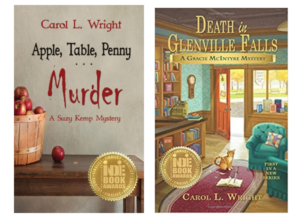
Carol L. Wright left a career in law and academia to write mysteries and more. Her traditional mystery, Death in Glenville Falls, was a finalist for two international book awards as was her novelette, Apple, Table, Penny . . . Murder. Her short stories in a variety of genres have appeared in many anthologies and literary journals. Some of her favorites are collected in A Christmas on Nantucket and other stories. She is a founding member of the Bethlehem Writers Group, LLC, a life member of Sisters in Crime and the Jane Austen Society of North America, and a member of SinC Guppies. Find out more on her website at CarolLWright.com .
SCBWI has classes on writing for Middle Grade and Young Adult (and of course picture books)
Lots of Zoom classes that are so good and inexpensive
It’s a great bargain for all the local groups, conferences, and resources. I’ve made so many friends too!
Thanks for the tip, Betsy. I attended Society of Children’s Book Writers and Illustrators (SCBWI.org) events when I first began this project a few years ago. I found their programs to be very helpful and the writers warm and welcoming. It’s a great organization. I’ll be sure to check back with them.